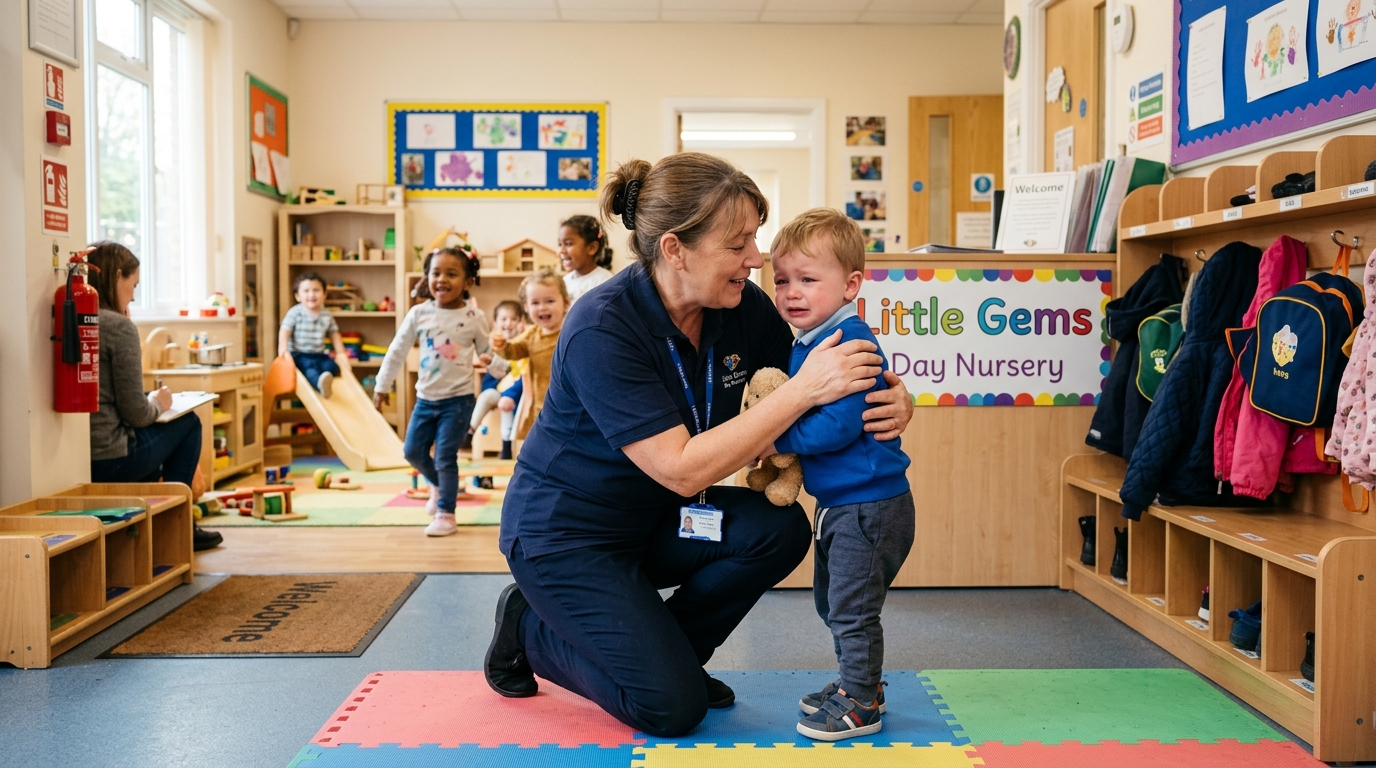
Settling your child into nursery is one of the more emotionally intense experiences of early parenthood. Even when you know the nursery is wonderful and the staff are warm and skilled, handing your child over to someone else’s care and walking away while they cry is genuinely hard. You are not alone in finding it difficult.
Even when you know the nursery is wonderful and the staff are warm and skilled, handing your child over to someone else’s care and walking away while they cry is genuinely hard. You are not alone in finding it difficult.
The reassuring truth is that most children settle far more quickly than parents expect. This guide covers what the settling-in process typically looks like, how to make it easier for your child, and how to manage your own feelings throughout.
What Is Separation Anxiety and Is It Normal?
Separation anxiety is the distress a child shows when separated from their primary caregiver. It is not only normal but developmentally healthy. It shows that your child has formed a secure attachment to you, which is exactly what you want.
Separation anxiety typically peaks between eight and eighteen months, eases somewhat by age two, and often resurfaces when something changes, such as starting nursery, moving to a new room, or returning after illness. Understanding this makes the behaviour easier to interpret. Your child is not being difficult. They are being a completely normal small person who loves you.
What a Good Settling-In Process Looks Like
Reputable nurseries do not simply expect you to drop your child off and leave on day one. A well-planned settling-in process is gradual, child-led, and involves you at every stage. Here is what good practice looks like:
Initial visits together
Your first visit or two should involve you staying with your child in the nursery environment. This allows your child to explore the space, meet the practitioners, and begin to understand that this is a safe place while you are still there. It is also a chance for the key worker to start learning about your child: their likes, their routines, their comfort objects, and their temperament.
Short sessions with increasing independence
The next stage involves leaving your child for a short period, perhaps 30 to 60 minutes, then returning. Over several sessions, this extends gradually. The pace should respond to your child, not follow a fixed timetable. Some children are confident and independent within a few sessions. Others need several weeks. Both are perfectly normal.
The key person relationship
Every child in a nursery should have a named key person: a practitioner who takes particular responsibility for their care and development and with whom the child builds a primary relationship. A good key person takes time to genuinely know your child before the settling-in period begins, learns their routines, comfort signals, and interests, and becomes a secure base from which the child can explore.
Practical Tips for Parents During Settling In
There is plenty you can do to support the process at home and at drop-off:
Keep goodbyes warm but brief
Long, drawn-out goodbyes tend to increase distress, not decrease it. A warm, calm, consistent goodbye ritual, perhaps a specific hug and a simple phrase like “I’ll see you after lunch”, gives your child a predictable anchor. Then leave with confidence, even if you do not feel it. Children are remarkably attuned to parental anxiety.
Talk about nursery positively at home
In the days and weeks before starting and during settling in, talk about nursery in warm, matter-of-fact terms. Name the practitioners your child has met. Talk about the things they will do: the sandpit, the story time, the lunch. Familiarity reduces fear.
Maintain home routines
Consistent bedtime routines, mealtimes, and nap schedules at home support your child’s ability to manage the new demands of a nursery day. Tiredness and hunger make everything harder. A child who is well-rested and well-fed is better equipped to engage with a new environment.
Send a comfort object
A small toy, a blanket, or even a photograph of you tucked into their bag gives your child a tangible connection to home. Many nurseries actively encourage this. Check with the nursery team what works best in their setting.
Share information with the key person
Tell the key person everything relevant: nap timings, favourite foods, how your child shows they are tired, words they use for comfort, anything that soothes them when upset. The more the key person knows, the more quickly they can build a genuine connection with your child.
How Long Does Settling In Take?
There is no fixed answer. Most children are meaningfully settled within four to six weeks. Some take less time. A few take longer, particularly children who are naturally more sensitive or who have experienced changes at home. If your child is still significantly distressed after six to eight weeks, it is worth having a detailed conversation with the key person and the nursery manager.
It is also worth separating the drop-off distress from the child’s experience during the day. Many children cry at the gate and are absorbed in play within minutes. Ask the nursery to let you know how your child is shortly after drop-off. The information helps, and most nurseries are happy to send a message or photo.
When It Is Hard for You Too
Parents are often surprised by how difficult they find the settling-in period, even when they know logically that their child is safe and well-cared-for. Feelings of guilt, sadness, and anxiety are common. So is a slightly irrational urge to stand outside the nursery window.
A few things help. Trust the process. Trust the practitioners. Stay connected by asking for updates during the day if you need reassurance. And remind yourself that helping your child build relationships beyond your family is one of the most important things you can do for them.
What Dee’s Does to Support Settling In
At Dee’s Day Nursery in Wimbledon, settling-in is treated as a genuine priority, not an administrative formality. Each child has a named key person who meets the family before the child starts, learns about the child’s routines and preferences, and takes an active role in building the relationship during settling-in sessions.
Parents receive updates through the Famly app throughout the day, including photos, meal notes, and activity updates. If you have any concerns during the settling-in period, the team is available to talk them through, whether at pick-up or by phone.
Ready to Visit?
If you are thinking about starting your child at nursery and want to see how Dee’s approaches settling in, the best thing to do is come and visit. You can meet the team, see the rooms, and ask all your questions in person.
Visit www.deesnursery.co.uk to find out more or to book a tour. We would love to meet you and your little one.