If you have been visiting nurseries or reading about early years childcare, you have probably come across the phrase key person approach nursery. It is one of those terms that gets mentioned a lot — but what does it actually mean in practice, and why should it matter to you as a parent? Understanding the key person approach properly will help you ask better questions on nursery visits and make a more informed decision about where your child will thrive.
What Is the Key Person Approach in Nurseries?
The key person approach is a way of organising care in an early years setting so that each child is assigned to one particular member of staff — their key person — who takes special responsibility for their wellbeing, learning, and relationships within the nursery.
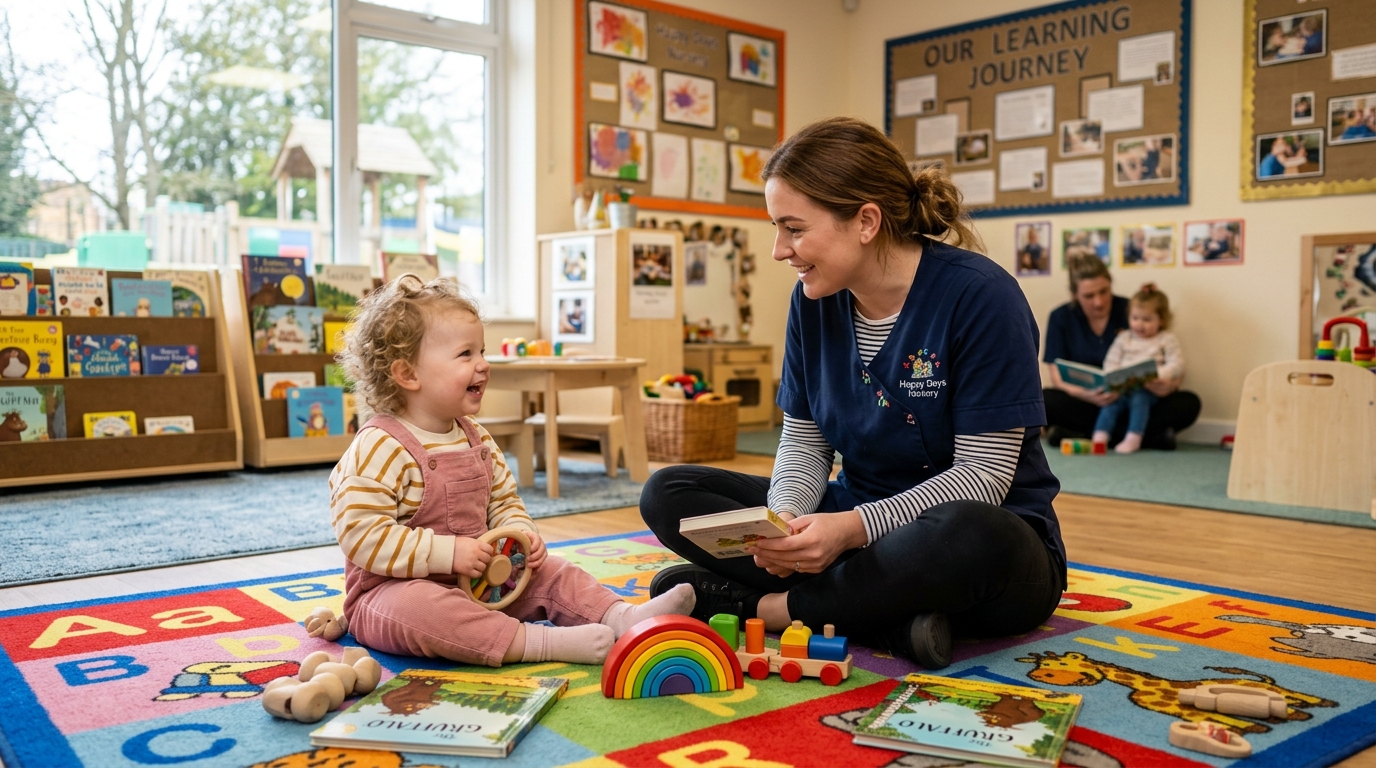
This is not simply an administrative arrangement. The key person is the adult who gets to know your child as an individual: their temperament, their preferences, their fears, what makes them laugh, how they like to be comforted, and how they communicate when they do not yet have the words. The key person builds a genuine relationship with both the child and the family, acting as a bridge between home and nursery life.
In practice, the key person might be the one who greets your child at the door in the morning, carries out their care routines (such as feeding or nappy changes), sits with them at mealtimes, and comforts them if they become upset. They are the consistent, familiar adult in an environment that is full of new faces and new experiences.
Why the Key Person Approach Is Central to the EYFS
The key person approach is not optional — it is a legal requirement under the Early Years Foundation Stage (EYFS) framework, which governs all registered early years providers in England. The EYFS is clear that every child must be assigned a key person before they start at a setting, and that this key person must help ensure the child feels safe, secure, and cared for.
The reason it is embedded in law reflects decades of research into attachment theory and early childhood development. We know that young children learn best when they feel emotionally secure. A child who is anxious, unsettled, or lacking a trusted adult to turn to is not in the right state to explore, play, and develop — even in the most beautifully resourced environment. The key person relationship creates the foundation of safety from which everything else grows.
John Bowlby’s attachment theory, developed in the mid-twentieth century and built upon by many researchers since, showed that children form deep emotional bonds with their primary caregivers — and that these bonds shape how they relate to the world. When a child is separated from their primary attachment figure (usually a parent), they need a secondary attachment figure to step into that role. In a nursery, that person is the key person.
How the Key Person Approach Supports Attachment
Attachment in early childhood is not just about feeling comfortable. It affects cognitive development, language acquisition, emotional regulation, and social skills. Children who have secure attachments are more curious, more resilient, and better able to manage the challenges of learning and relationships throughout childhood and beyond.
A key person who genuinely knows a child can also spot when something is not quite right. A change in behaviour, a reluctance to eat, unusual clinginess — a key person who has built a real relationship will notice these things and respond appropriately, whether that means a quiet word with parents, a change in approach, or simply a bit of extra time and reassurance.
The key person approach also matters for transitions within nursery. When a child moves from the baby room to the toddler room, for example, a well-managed nursery will handle this carefully — often with the key person spending time in the new room alongside the child before the move, and ensuring the receiving key person has a proper handover of everything they know about that child.
What the Key Person Approach Looks Like in Practice
Knowing the theory is one thing. Seeing it in action is another. Here is what the key person approach should look like in a nursery that is genuinely committed to it:
- Your child is met by their key person at drop-off, or the key person is notified immediately on arrival
- Care routines (nappy changes, meals, comfort) are led by the key person wherever possible
- The key person keeps regular, detailed observations of your child’s learning and development
- You receive regular updates from your key person — both informally at collection time and through more formal progress conversations
- If your key person is absent, there is a named back-up who also knows your child well
- The key person relationship is built gradually, starting with settling-in visits before your child’s official start date
One thing worth understanding is that the key person approach requires real emotional investment from staff. It is not about a rota. A key person who is genuinely engaged with your child will talk about them with warmth and specificity — not in vague generalities.
What Good Communication Between Key Person and Family Looks Like
The key person approach works best when there is an open and trusting relationship between the key person and the child’s family. This means sharing information in both directions. Parents should feel able to tell the key person about things happening at home — a new sibling, a difficult night, a change in routine — because this context matters for how the child is supported in nursery.
In return, the key person should be proactive in sharing what they observe. Many nurseries use digital tools to keep parents informed throughout the day. At Dee’s Day Nursery in Wimbledon, the Famly app allows key persons to send observations, photos, and daily updates directly to parents, creating a genuine sense of partnership.
This kind of communication is not just reassuring for parents — it is educationally meaningful. When parents and key persons are in dialogue about what a child is interested in at home and at nursery, learning can be built on consistently in both environments.
Questions to Ask About the Key Person Approach on a Nursery Tour
When you visit a nursery, the key person approach is worth exploring in some detail. Here are questions that will help you understand how seriously a setting takes it:
- Who will be my child’s key person, and can I meet them before my child starts?
- How do key persons manage the relationship when they are on annual leave or sick?
- How often will I receive updates from my child’s key person?
- How is the key person approach managed during busy periods or staff changes?
- How do you handle the transition to a new room — does the key person stay with the child?
- How do you match children with key persons?
Be wary of vague or generic answers. A nursery that takes the key person approach seriously will have clear, specific processes — and staff who can talk about individual children with genuine knowledge and care.
The Key Person Approach at Dee’s Day Nursery, Wimbledon
At Dee’s Day Nursery on Hartfield Road, Wimbledon, the key person approach is central to how the whole nursery runs. From the moment a family joins, the assigned key person works to build a relationship — not just with the child, but with the whole family. They take time during settling-in visits to understand each child’s individual needs, preferences, and home routines.
The nursery’s values of nurturing and individual recognition are directly reflected in how the key person system is managed. Children are seen as individuals with their own stories, temperaments, and learning styles — not as a group to be managed collectively. The key person is the person most responsible for making sure that each child’s individuality is seen, respected, and built upon.
Dee’s is open Monday to Friday, 8am to 6pm, for children aged six months to five years, and is a seven-minute walk from Wimbledon station.
Find Out More and Book a Tour
If you would like to see the key person approach in action and meet the team at Dee’s Day Nursery, the best next step is to book a tour. Visiting in person gives you the opportunity to ask your questions, see the rooms, and get a feel for the nursery’s atmosphere.
Visit www.deesnursery.co.uk to find out more and to arrange a visit. We would love to show you what makes Dee’s a place where children feel genuinely known and cared for.