Returning to work when your baby is just six months old is a big step. For many parents, starting nursery at 6 months is the reality of maternity or paternity leave ending — and it raises a host of questions. Is my baby too young? Will they be alright without me? What will their day actually look like? How do I even begin to prepare? This guide is for parents navigating exactly this, offering practical answers and honest reassurance about what good nursery care for very young babies looks like.
Is Six Months Too Young for Nursery?
This is the question most parents ask first, and the honest answer is: no, six months is not too young — provided the nursery is the right one. Babies of this age are sociable, curious, and beginning to engage actively with the world around them. They respond to faces, voices, and sensory stimulation. A well-staffed, warm baby room with consistent caregivers can offer a genuinely positive experience for a child this age.
What matters far more than the baby’s age is the quality of the care they receive. A nursery with low staff ratios, high turnover, and little personalisation of routines is not the right place for any baby, regardless of age. A nursery with a genuine key person approach, flexible routines, and experienced, caring staff is one where a six-month-old can thrive.
The legal staff-to-baby ratio in England for children under two is 1:3. When starting nursery at 6 months, this ratio is particularly important — a baby needs a lot of one-to-one time, and a setting that is overstretched is not safe or nurturing for a child this young.
What to Expect on Your Baby’s First Days at Nursery
Most nurseries operate a settling-in period for all new starters, but this is especially important for very young babies. Settling in typically involves a series of short visits — first with you present, then with you briefly absent, then for progressively longer periods — before your baby begins full sessions.
During these visits, you and the baby room team should be exchanging a great deal of information. The nursery will want to know:
- Your baby’s current feeding schedule and preferences (breast, formula, expressed milk, weaning stage)
- Sleep cues and preferred settling methods
- What comforts your baby when upset (a particular toy, a certain song, being held in a specific way)
- Any health or allergy information
- Your baby’s current developmental stage and what they are interested in
A nursery that does not ask these questions in detail — or that gives you the impression that all babies are treated the same way — is one to approach with caution.
Sleep and Feeding Arrangements for Six-Month-Olds at Nursery
Sleep and feeding are the two areas parents most often worry about when their baby starts nursery at 6 months. These are entirely reasonable concerns, and it is worth asking about both in specific detail before you decide on a place.
Sleep
Good nurseries follow safe sleep guidelines (laid down by the Lullaby Trust and referenced in the EYFS), which means babies sleep on their backs in their own sleep space — either a cot, a sleep pod, or a designated safe surface. Ask how many sleeping spaces the baby room has, how they are monitored, and what the process is for settling a baby who is struggling to sleep.
Crucially, ask whether the nursery will follow your baby’s existing sleep routine or whether they impose a set nap schedule. The former is far preferable for a young baby. A baby who is forced to stay awake or sleep at the “wrong” time will be overtired or dysregulated, and this makes everything harder — for the baby, the staff, and the parent who collects a very unhappy child at 6pm.
Feeding
For a six-month-old, feeding is central to the day. If your baby is breastfed, ask about the nursery’s policy on storing and preparing expressed milk. If formula-fed, ask about hygiene procedures. If you are in the early stages of weaning, ask how the nursery supports this — do they follow your lead on introducing new foods, or do they have a set menu?
At Dee’s Day Nursery in Wimbledon, chef-prepared meals are available for babies who are ready for solid food, and the team works closely with families on individual dietary needs, allergies, and preferences. For milk feeds, the approach is led by each family’s preferences and the baby’s own routine.
How Nurseries Support Very Young Babies Emotionally
A six-month-old cannot tell you they are sad or frightened. They can only communicate through crying, body language, and behaviour. Good nursery staff are trained to read these cues and respond promptly — not to leave a baby to “self-settle” in the way some sleep training approaches might suggest.
The key person approach (a legal requirement under the EYFS) is especially important for babies starting nursery at six months. The assigned key person builds a genuine relationship with your baby over the settling-in period, learning their individual cues and becoming a trusted secondary attachment figure. This does not replace you — it supports your baby to feel safe when you are not there.
Staff in baby rooms should be warm, responsive, and unhurried. This age group requires the most hands-on care of any nursery cohort — nappy changes, feeds, settling to sleep, comfort, and interaction all take time. A baby room with too many children per adult simply cannot provide this level of care.
Emotional Preparation for Parents
It would be remiss not to acknowledge that starting nursery at 6 months is often harder for parents than it is for babies. Six months of maternity or paternity leave is a period of intense closeness and often leads to a deep bond that makes separation genuinely painful — even when you know, rationally, that your baby is in good hands.
A few things that can help:
- Use the settling-in period fully — do not rush it. Those early short visits help you as much as your baby.
- Ask about the nursery’s communication approach. Knowing you can receive photo updates and daily reports via an app like Famly makes a real difference to how the day feels.
- Talk to other parents at the nursery if you can. Hearing from people who have been through it is often more reassuring than any amount of information from staff.
- Remember that distress at drop-off is not evidence that something is wrong. Babies often settle within minutes of a parent leaving, once the cue of the parent’s distress is gone. Ask staff what your baby is like five minutes after you leave.
Questions to Ask When Visiting a Nursery for Your Six-Month-Old
When visiting a nursery ahead of your baby starting at 6 months, here are the questions worth asking the baby room team directly:
- What is your current staff-to-baby ratio, and how is it covered during breaks?
- Who will be my baby’s key person, and how long have they been in post?
- How do you approach settling in for very young babies?
- How do you manage feeding and sleep for each baby’s individual routine?
- How will you keep me updated throughout the day?
- What happens if my baby is unwell or distressed and I need to be contacted?
- What outdoor access do babies have, and how is this managed safely?
Why Dee’s Day Nursery in Wimbledon Is a Warm Choice for Young Babies
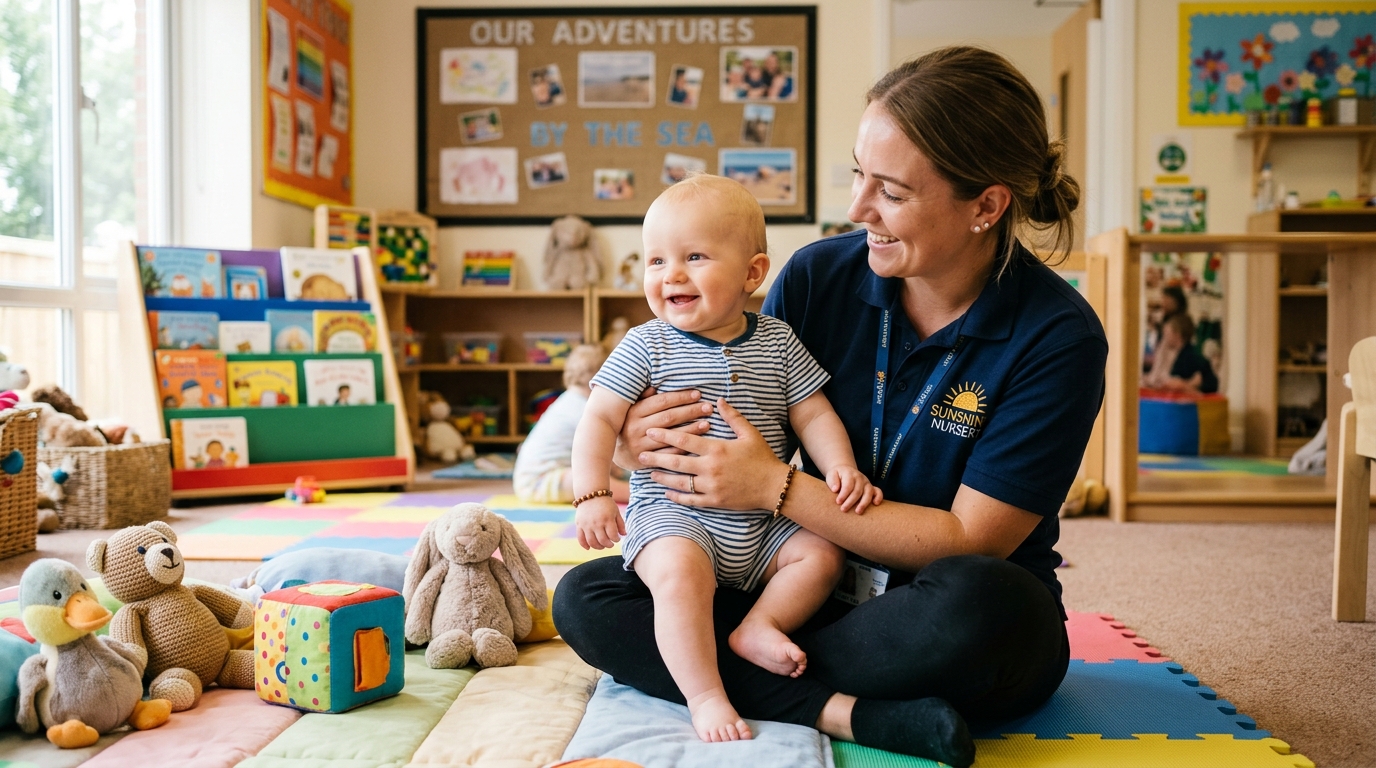
Dee’s Day Nursery on Hartfield Road, Wimbledon, welcomes babies from six months of age. The baby room is staffed by experienced practitioners who understand the particular needs of this age group and who are committed to following each family’s individual routines for feeding and sleep.
The Famly app keeps parents connected throughout the day with real-time updates, photos, and care records. The key person approach means your baby will have a consistent, familiar adult from their very first day. And the nursery’s spacious garden is accessible to babies too — fresh air and outdoor time are built into daily life from the earliest months.
Dee’s is open Monday to Friday, 8am to 6pm, and is seven minutes on foot from Wimbledon station (SW19 4AA).
Ready to Take the Next Step? Book a Tour
The most important thing you can do before your baby starts nursery is visit in person. Meeting the baby room team, seeing the environment, and asking your questions face to face will give you a much clearer sense of whether it is the right place for your family.
Visit www.deesnursery.co.uk to find out more about Dee’s Day Nursery and to book a tour. We look forward to meeting you and your baby.