Choosing a nursery for your baby is one of the most significant decisions you will make as a parent. If your child is under one year old, one of the first things you should look at closely is the baby room nursery provision. The baby room is not simply a space where very young children are kept safe while parents are at work — it is a carefully considered environment designed to support the earliest stages of development. Knowing what to look for means you can ask the right questions and feel genuinely confident in your choice.
What Makes a Good Baby Room Nursery Environment?
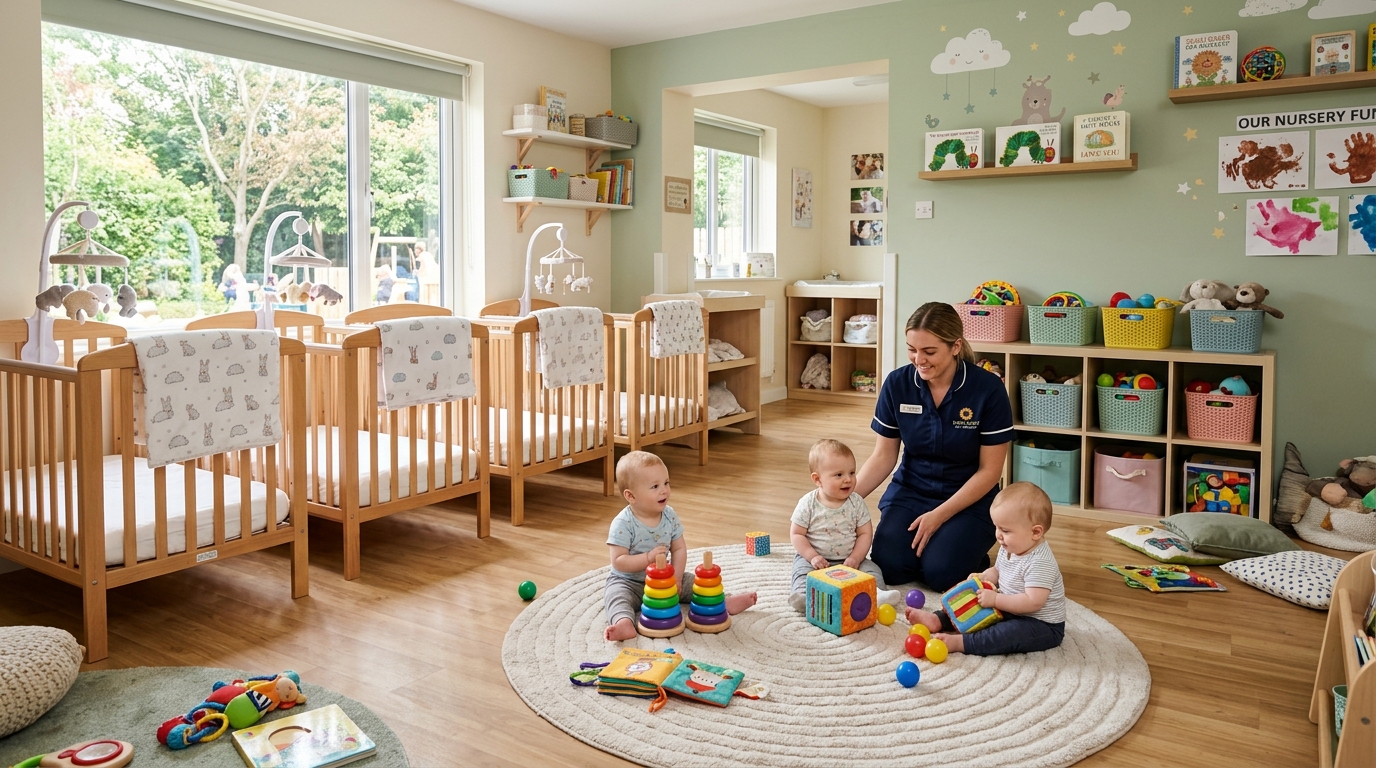
A baby room should feel calm, warm, and unhurried. Babies need consistency, familiarity, and low levels of sensory overwhelm. That means the room should not be cluttered or noisy, and there should be clearly defined areas for sleeping, feeding, playing, and nappy changing.
Look for soft lighting in sleep areas, comfortable feeding chairs for staff (and parents during settling in), and age-appropriate toys that encourage sensory exploration. Babies learn through touch, sound, sight, and movement — so natural textures, mirrors, soft music, and objects of different shapes and weights all have a role to play.
The layout matters too. You want to be able to see that babies are being held, talked to, and responded to — not simply placed in bouncers or left to amuse themselves. Interaction is everything at this stage. A baby room that feels like a warm, responsive home environment is far preferable to one that feels clinical or institutional.
Staff Ratios in the Baby Room: What the Law Says
In England, the legal requirement is one member of staff to every three babies under the age of two. This 1:3 ratio exists because babies need a great deal of hands-on attention — feeding, nappy changes, settling to sleep, comfort, and constant interaction. When you visit a nursery, check whether they consistently meet this ratio or whether they exceed it.
Ask also about staff qualifications. Staff working in baby rooms should have relevant early years qualifications, and ideally some experience specifically with very young children. Ask whether staff have training in safe sleep practices, infant feeding, and first aid. These are not fussy questions — they are entirely reasonable things for a parent to want to know.
Continuity matters enormously too. High staff turnover in a baby room is a red flag. Babies build attachments with familiar adults, and constant changes in the faces around them can cause unnecessary stress. Ask how long staff have been in post and how the nursery manages transitions when staff members do leave.
Sleep and Feeding Routines for Babies in Nursery
Every baby is different, and a good nursery will follow your baby’s individual routine rather than imposing a rigid schedule. Ask how the nursery handles sleep — do they follow your baby’s cues, or do they have set nap times? Do they use cots, sleep pods, or floor mats? Is the sleep area quiet and separate from the play area?
For feeding, you should be asked about your baby’s needs during the settling-in process. If your baby is breastfed, ask how expressed milk is stored and prepared. If formula-fed, ask about their preparation process and hygiene standards. Some nurseries, like Dee’s Day Nursery in Wimbledon, offer chef-prepared meals for older babies, but for very young infants it is essential that your own feeding preferences are respected and supported.
Ask how the nursery records feeding and sleeping. Many use digital apps — Dee’s uses the Famly app — which means parents can receive real-time updates throughout the day. This kind of transparency is reassuring, especially in those early weeks when every feed and nap feels significant.
Sensory Play and Early Learning in the Baby Room
Babies are not too young to learn — in fact, the first year of life is one of the most intense periods of brain development a person will ever experience. A good baby room nursery will have a range of sensory resources that stimulate curiosity without overwhelming.
Look for:
- Treasure baskets filled with everyday objects of different textures and weights
- Tummy time mats with mirrors and contrasting patterns
- Soft books, rattles, and musical toys
- Outdoor access, even for babies — fresh air and natural light matter
- Staff who narrate what they are doing, sing to babies, and make eye contact during care routines
The last point is perhaps the most important. Research consistently shows that the quality of language directed at young babies — even before they can respond verbally — has a lasting impact on communication and cognitive development. Staff who talk, sing, and respond to babies’ sounds and gestures are doing something genuinely valuable.
Settling In: What to Expect for Very Young Babies
Settling a baby into nursery is a gradual process, and a good nursery will give you the time you need. Most nurseries offer a settling-in period of several short visits before your baby’s full start date. During these visits, you stay with your baby so they can begin to associate this new environment with your presence and safety.
Ask how the nursery manages the transition on the first full days. How do staff comfort a baby who is distressed? What is the process for contacting parents if a baby is unsettled? What does a typical first week look like?
At Dee’s Day Nursery in Wimbledon, the baby room team understands that settling in is a two-way process — it is just as important for parents to feel confident and informed as it is for their baby to feel secure. The key person assigned to your child plays a central role in this, building a relationship with both baby and family from day one.
Questions to Ask When Visiting a Baby Room
When you visit, do not be afraid to ask detailed questions. Good nurseries will welcome them. Here are some worth raising:
- What is your current staff-to-baby ratio, and does it ever change?
- Who would be my baby’s key person, and how does that relationship work?
- How do you follow my baby’s individual routine for feeding and sleeping?
- How do you communicate with parents throughout the day?
- What is your policy on safe sleep?
- How do you handle a baby who is struggling to settle?
- What outdoor access do babies have?
- How are staff recruited and what qualifications do they hold?
Trust your instincts too. When you walk into a baby room, notice the atmosphere. Are babies being held? Are staff engaged and talking? Does the room feel calm and purposeful? Your gut reaction tells you a great deal.
Why Dee’s Day Nursery Baby Room Stands Out
At Dee’s Day Nursery on Hartfield Road in Wimbledon, the baby room has been designed with the youngest children at its heart. The team works to very young children’s individual rhythms, following sleep and feeding routines set by families rather than imposing a one-size-fits-all approach. The Famly app keeps parents updated throughout the day with observations, photos, and care records.
Dee’s four pillars — Well-being, Exploration, Communication, and Environment — are woven into daily life in the baby room. Sensory play, time outdoors in the spacious garden, warm interactions with key staff, and a focus on each child as an individual all reflect the nursery’s broader values of empowerment, community, and nurturing.
Dee’s is open Monday to Friday, 8am to 6pm, and is a seven-minute walk from Wimbledon station. They welcome children from six months of age.
Book a Tour of the Baby Room
The best way to judge whether a baby room is the right fit for your family is to visit in person. Seeing the space, meeting the team, and asking your questions face to face gives you a much clearer picture than any website can.
If you are looking for nursery provision in Wimbledon for a baby, we would love to show you around. Visit www.deesnursery.co.uk to find out more about our baby room and to book a tour. We look forward to meeting you and your little one.